

Choosing a TV system is an important decision for senior living communities. The right system can make TV service easier to manage. It can also affect installation, repairs, and costs. There are two main options. You can use a centralized TV headend. Or, you can use individual receivers in each room.
If you are looking for a senior living TV system, it helps to understand both options. This guide explains the difference in simple terms. It covers cost, wiring, maintenance, and the resident experience.
What Is a Centralized Headend?
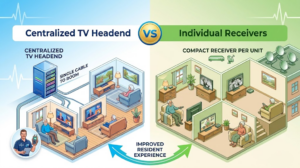
A centralized headend is the main TV system for a building. The equipment is kept in one place. This is often an equipment room or utility room. The system receives TV programming. It then sends that programming to TVs throughout the building.
The TVs connect to the system through the building’s wiring. This means you do not need a separate receiver in every room. A centralized system can be useful in larger senior living communities. Staff can manage much of the TV system from one place. For example, staff can make channel changes from the central system. They do not have to visit every room.
What Are Individual Receivers?
An individual receiver is a TV box for one room. Each room has its own receiver. The TV connects directly to that receiver. This setup is similar to a TV setup in a home. The main difference is the number of TVs. A senior living community may have many rooms with their own receivers. Individual receivers may work well for smaller communities. They may also be useful when a property has limited wiring.
How Does Wiring Affect the Choice?
Look at the building before choosing a TV system. Check the existing wiring first. Also look at the size of the property. The number of buildings matters too. A large building may already have wiring that can support a centralized TV system.
Older buildings may have older wiring. New wiring may be needed. This can increase the cost of a centralized system. A property with several separate buildings can also be more difficult to connect. A single building may be easier to serve with one central system.
PulseTVNet looks at your property layout, TV count, existing cabling, viewing areas, and programming needs when planning a commercial TV solution.
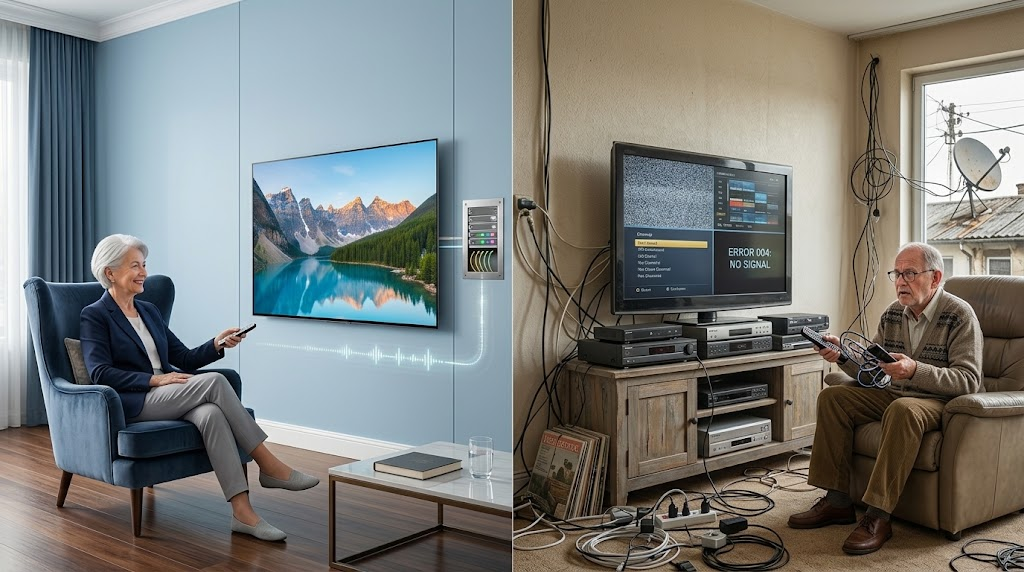
Centralized TV System vs. Individual Receivers
Here is a simple comparison of the two options.
| Factor | Centralized Headend | Individual Receivers |
| Equipment | One main system | One receiver per room |
| Channel changes | Managed from one place | Managed by each receiver |
| Installation | May need more wiring | Easier for smaller setups |
| Repairs | Fewer main devices | More devices to check |
| Adding rooms | Can be easier for large systems | Each new room needs a receiver |
| TV problems | One system problem can affect many TVs | A problem usually affects one room |
| Staff work | More work can be done from one place | More room visits may be needed |
| Channel lineup | Can be the same across rooms | May differ between rooms |
| Good fit | Larger communities | Smaller properties |
Neither system is right for every property. The right choice depends on your building and TV needs. Consider the number of rooms. Look at the wiring. Think about future changes too.
Cost of a Centralized TV System vs. Individual Receivers
Cost is an important part of the decision. A centralized TV system may cost more at the start. It may need new wiring and central equipment. It may also need more planning before installation. But the system is managed from one place. This can make some repairs and updates easier.
Individual receivers spread the equipment cost across the rooms. This may be easier for a smaller property. There is a tradeoff, though. More rooms mean more receivers. Each receiver may need service or replacement. The total cost can increase as the number of rooms grows.
Before choosing a system, review what TV service can cost for a senior living community. The final cost depends on several things. These include the number of TVs, wiring, equipment, programming, and installation. PulseTVNet can help evaluate these needs when planning your commercial TV system.
Maintenance, Reliability, and Staff Workload
The TV system can affect how much work staff need to do. A centralized headend keeps the main equipment in one place. When there is a problem, technicians can start by checking that equipment. Channel changes can also be made from one place.
There is one important concern. If the main system stops working, many TVs may lose service at the same time. Individual receivers work differently. If one receiver stops working, the problem will usually affect only that room. Other residents can continue watching TV.
However, there are more receivers to manage. Staff or technicians may need to visit rooms to fix problems. This can take more time when a community has many rooms.
Resident Experience and Usability
The TV setup can also affect residents. A centralized headend can provide the same channel lineup across many rooms. Everyone can have the same channel numbers. Channel changes can also be made at the same time.
This can make TV service easier for staff to manage. It can also make the TV experience more consistent for residents. Individual receivers offer more flexibility. Each room can have its own receiver. But staff may need to update each receiver separately.
If some receivers are not updated, rooms may have different channel lineups. This can lead to more questions from residents. For senior living communities, a simple and consistent TV setup can make daily TV use easier.
Resident Rooms vs. Common Areas
Resident rooms and common areas may have different TV needs. When it comes to resident rooms people often need a simple setup. Residents should be able to find their usual channels easily. Staff may also want the same channel lineup across many rooms. Common areas can be different.
These areas may include:
- Lounges
- Dining rooms
- Activity rooms
- Community spaces
A common-area TV may need different programming. For example, the facility may want a different channel in a lounge. Because of this, some properties may use both types of systems. Resident rooms could use a centralized system. Some common areas could use individual receivers. This is called a hybrid setup.
Common Mistakes Senior Living Facilities Make
Senior living facilities can avoid several common TV system mistakes.
Choosing Based Only on Price
The cheapest option may not be the best fit for the property. Think about the number of rooms and TVs too. Also consider future growth.
Not Checking the Wiring
Old or limited wiring can create problems during installation. Check the wiring before choosing the system.
Not Looking at the Building Layout
The number of buildings matters. A single building may be easier to serve with one central system. Several separate buildings may need a different approach.
Treating a Commercial System Like a Home System
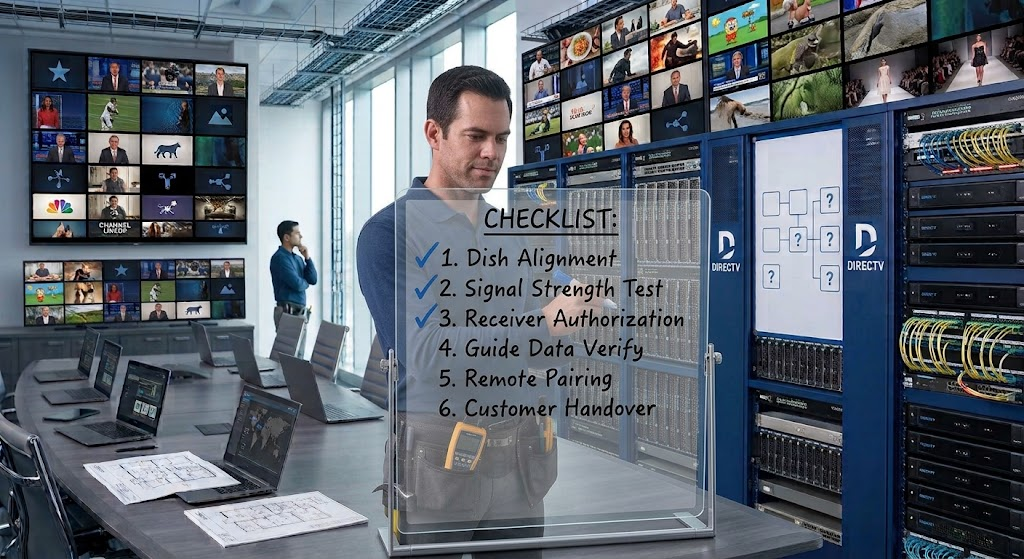
A TV setup for one home is different from a system for many rooms. A senior living community may have dozens or hundreds of TVs. The system needs to match the size and needs of the property. A commercial DIRECTV installation checklist can help facilities prepare for installation.
Which TV System Should You Choose?
There is no single answer for every senior living community. A larger community may benefit from a centralized headend. This can be especially useful when the property has many TVs and suitable wiring. A smaller property may find individual receivers easier.
This can be helpful when there are fewer TVs or limited wiring. Some properties may need both options. The choice should start with the property itself. Look at the building layout. Check the wiring. Count the TVs. Also consider programming needs and future changes. Contact PulseTVNet to discuss your property’s TV needs and explore a commercial TV solution for your community.
Frequently Asked Questions
What is a centralized TV headend?
A centralized TV headend is the main TV system for a building. It receives TV programming and sends it to many TVs. The main equipment stays in one central location.
What are individual TV receivers?
Individual TV receivers are separate boxes for each TV. Each room has its own receiver. The receiver provides TV programming to that room.
Is a centralized headend better for large senior living communities?
A centralized headend can work well for larger communities. It allows staff to manage the main TV system from one place. The right choice also depends on the building, wiring, and number of TVs.
Are individual receivers better for smaller senior living facilities?
Individual receivers can work well for smaller properties. They may be easier to install when there are fewer TVs. Managing many receivers can take more time as the property grows.
Can a senior living facility use both systems?
Yes. A facility can use a centralized headend for some TVs and individual receivers for others.
This may work well when resident rooms and common areas have different needs.
What should a senior living facility consider before choosing a TV system?
Start with the basics. Look at the number of TVs, building layout, and existing wiring. Also consider programming, installation, maintenance, and future needs. A property assessment can help the facility choose a suitable TV system.
