



If your board is weighing bulk TV service for HOAs, you are probably asking the same three questions every association asks: how does it work, what will it cost per home, and who should we trust to deliver it? A bulk agreement can lower what each household pays and simplify service across the whole community.
It can also lock the association into a long contract that residents resent if the terms are weak. Before you compare quotes, start with the delivery options, because the choice between DIRECTV satellite vs. streaming shapes wiring, cost, and reliability.
This guide explains how bulk service works, what pricing looks like, which clauses to negotiate, and a step-by-step process your board can follow.
What Is Bulk TV Service for an HOA?
A bulk TV agreement is one contract between the association and a TV provider. Instead of every homeowner signing up separately, the HOA negotiates a single per-home rate, and that fee is billed through dues or special assessments. Every home receives service whether residents use it or not. That guaranteed volume is what lets providers offer rates well below retail.
The same model applies to bulk TV service for condos and townhome communities. The association typically covers shared spaces as well, such as the clubhouse, pool, and fitness center, so those TVs are included in the package.

How a Bulk TV Agreement Works
Most agreements follow the same basic flow:
- The board selects a provider and signs one master contract for the community.
- The provider installs or upgrades the infrastructure, from in-home equipment to shared headend or wiring, depending on the delivery model.
- A per-unit fee is added to dues or assessments, so homeowners pay through the association instead of paying a provider directly.
- Residents activate service and receive the base programming package included in the agreement.
- Optional upgrades such as premium channels, extra boxes, or DVR are usually billed to the resident directly, though this varies by contract.
That last point matters. Always confirm what the base fee includes and what each resident pays on top of it.
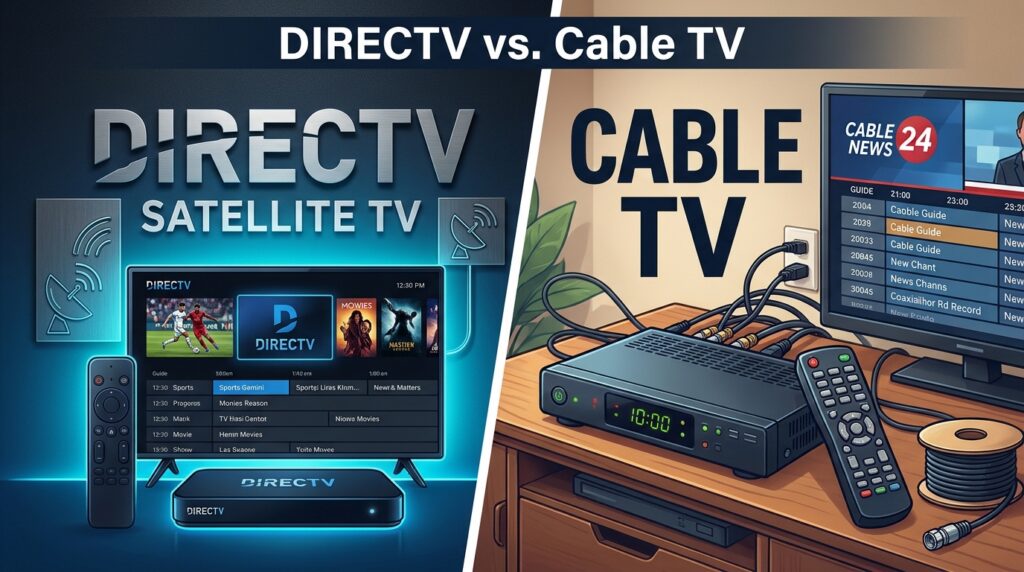
Cable, Satellite, or Streaming: Which Delivery Model Fits Your Community?
HOA TV and internet packages generally come in three forms. The right one depends on your existing wiring, the quality of the community’s internet, and whether dishes are allowed under your governing documents.
| Delivery model | Best when | Main limitation | If something fails |
| Cable (coax or fiber) | Wiring is already in place, and the operator serves the area. | Often tied to one local operator and older contract structures | An outage in the shared network affects many homes at once |
| Satellite (DIRECTV bulk) | Dishes are permitted, and roofs or common areas have a clear view of the sky. | Needs dish placement approval and a clear line of sight | Heavy weather can affect signal, but internet and power at the home are less central to the feed |
| Bulk streaming over the internet | The community has strong, reliable broadband and no wish for dishes or coax | Depends entirely on internet quality | An internet outage takes TV down with it, and homes still need power to run equipment |
Bulk streaming, such as DIRECTV Bulk Stream, needs no dish or coax, which makes it attractive for communities where exterior equipment is restricted. If you are weighing the consumer streaming side of the market, our comparison of YouTube TV vs. DIRECTV Stream shows how the platforms differ in channels and features.
How Much Does Bulk TV Service Cost for HOAs?
Bulk TV pricing for HOAs is usually well below what residents would pay at retail, but almost no provider publishes exact numbers. One reseller lists DIRECTV Bulk Stream from about $25 per unit. Treat that as a starting point, not a quote, because the final price moves with several factors:
- Number of units: larger communities generally qualify for better per-unit rates.
- Programming package: a basic lineup costs less than one with sports or premium tiers.
- Equipment: set-top boxes, extra TVs, DVRs, and common-area receivers.
- Installation and wiring: retrofits cost more than new construction.
- Contract length: longer terms often lower the monthly rate but reduce your flexibility.
- Internet bundling: adding Wi-Fi or internet changes the total.
When you compare bids, ask each provider what is excluded from the per-unit rate. Premium channels, extra boxes, DVR service, installation charges, and annual increases are the usual places where a low headline price grows.
Because unit count, wiring, and programming differ from one community to the next, PulseNetTV does not quote a one-size-fits-all rate. We review your property first and then provide a customized proposal with itemized pricing, so your board can compare bids on equal terms.

Mandatory vs. Optional Bulk TV
In a mandatory bulk arrangement, every home pays the fee regardless of use. This produces the lowest rates and the simplest administration, but it also draws the most resident pushback, especially from homeowners who already pay for another service.
In an optional or opt-in model, only participating residents pay. It is easier to accept, but the lower participation usually means higher per-unit pricing and more administrative work for the board and provider.
A mandatory contract can still be fair if the board explains the savings clearly, shares the cost comparison with owners, and gives residents time to ask questions before the vote or notice.
Governance: Check Your Bylaws, CC&Rs, and State Law First
Before signing anything, have the board review the bylaws and CC&Rs. Some associations can sign a bulk contract without a member vote, while others must put it to the membership. State law varies, so consult the association’s attorney before committing.
Residents often ask whether they can still choose their own provider. Under federal rules (47 CFR 76.2000), providers cannot demand exclusivity in these arrangements, so homeowners can add their own service. They still owe the bulk fee, however, because it is billed through the association.

Contract Terms to Negotiate
Terms of 8 to 10 years with pre-agreed annual increases are common in this market, so the contract deserves careful review. Ask for:
- A cap on annual price increases instead of open-ended escalators.
- A streaming-transition clause that lets the community move to a newer delivery model without penalty.
- Service-level commitments with clear response times and credits when they are missed.
- Defined renewal and exit terms, including notice periods and automatic renewal rules.
- Equipment ownership and upgrade responsibility during and after the term.
- A written scope covering common areas, extra boxes, and what happens when units are added.
Who Handles Resident Support?
One of the most overlooked questions is who residents call when something breaks. Forum threads from homeowners show people bounced between the HOA office and the provider, each pointing at the other. Put the support path in the contract: a single phone number, hours of coverage, escalation steps, and who handles in-home visits versus community-wide outages. A provider with round-the-clock technical support removes a lot of this friction for your board and management company.
| 20+ | Years of Industry Experience |
| 500+ | Communities Served |
| 10,000+ | Businesses Trust Us |
| 24/7 | Dedicated Customer Support |
See What One of Our Valued Customers Says:
“PulseNetTV has been a lifesaver for our residents, giving them a simple and reliable way to watch their favorite shows on their own with a support team that’s always there when we need them.”
Sarah TribuzioHow Large Shared-Infrastructure Installations Are Planned
Multi-unit properties share many of the same challenges as HOAs: dozens or hundreds of TVs, shared wiring, and one support path that has to work for everyone.
That is why our approach to senior living TV solutions is a useful reference for how large, shared-infrastructure installations are planned, from the first property walkthrough to final testing and ongoing support.
“Every community is different, so the right TV system starts with the property, not a package. We look at the wiring, the number of homes, and how residents actually watch. Then we stay with the board after installation, because a good bulk agreement should make life easier for residents, not harder.”
ToddHow to Choose a Provider: A Step-by-Step Process for Your Board
- Assess the community. Record the unit count, wiring type, current internet provider, and whether dishes are allowed. A property walkthrough helps, and a commercial DIRECTV installation checklist gives you a good list of what a provider should evaluate on site.
- Collect at least three quotes. Request itemized pricing so you can compare the same package, equipment, and term across bids.
- Review the governing documents. Confirm board authority and whether a member vote or owner notice is required.
- Vote or notify residents. Share the savings comparison and the timeline, and give owners an opportunity to ask questions.
- Negotiate and sign the contract. Use the clause list above, and have the association’s attorney review it.
- Plan the rollout. Agree on installation dates, resident communication, and the support path. If the community is moving away from an existing cable provider, this guide on how to switch a business from cable to DIRECTV explains the transition steps from assessment through testing.
Questions to Ask Every Provider
- What exactly is included in the per-unit price, and what is billed separately?
- What are the annual increases, and are they capped?
- Who supports residents, and what are the hours?
- What happens if the internet or power goes out?
- Can we move to a different delivery model during the term?
- What are the exit and renewal terms?
- Can we speak with similar communities you serve?
Ready to Compare Bulk TV Options for Your Community?
A good bulk agreement saves residents money and keeps the board out of day-to-day service problems. A weak one creates years of complaints. Gather your unit count, wiring type, and internet provider, then request a commercial quote and our team will review your property and recommend the right setup. You can also call 888-819-5707 to speak with a specialist.
Frequently Asked Questions
What is a bulk TV agreement for an HOA?
It is one contract between the association and a TV provider. The per-home fee is billed through dues or assessments, and every home receives service.
Does an HOA board need a member vote to sign a bulk TV contract?
It depends on the bylaws and state law. Some boards can sign on their own, while others need a membership vote.
Is bulk streaming TV better than bulk cable for a community?
It can be, when the community has strong broadband and wants no dishes or coax. Communities with weak internet may prefer satellite or cable.
How long are HOA bulk TV contracts?
Terms of 8 to 10 years are common, often with pre-agreed annual increases. Negotiate price caps and exit terms.
Does DIRECTV offer bulk service for HOAs and condos?
Yes. DIRECTV offers bulk options through satellite and bulk streaming, and commercial dealers can design the system around your property.
Who do residents call for support under a bulk TV agreement?
That depends on the contract, so name the support path in writing before signing.