

DIRECTV vs. Cable TV in 2026: Cost, Reliability, Channels, and Which to Choose
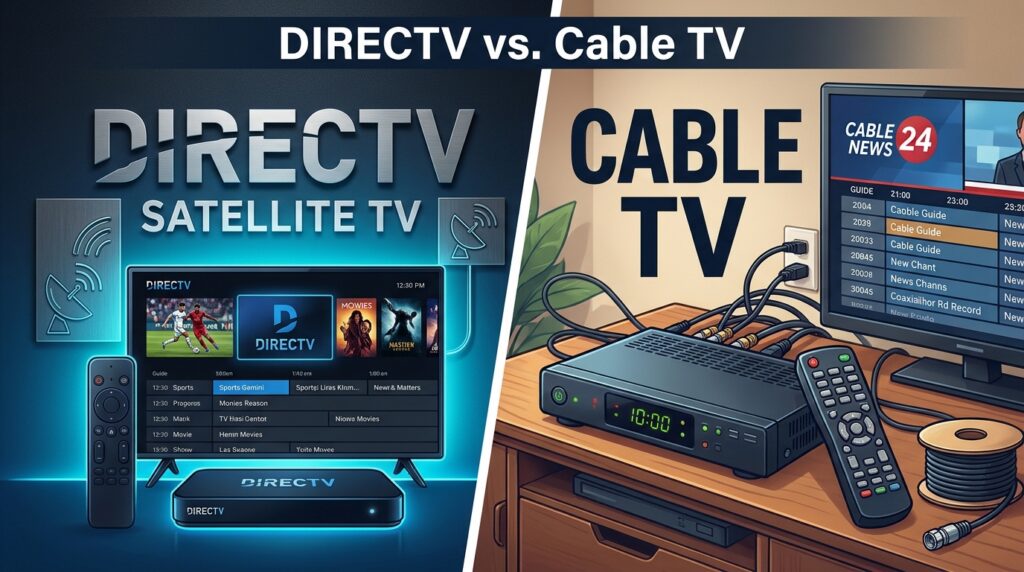
Choosing between DIRECTV and cable TV involves more than comparing advertised prices. The right choice depends on your location, internet reliability, channel preferences, installation requirements, and contract flexibility. For businesses, the stakes are higher. Hotels, restaurants, senior living communities, and healthcare facilities need to consider the number of TVs, commercial viewing rights, and the cost of distributing programming throughout their properties. This guide compares satellite TV, DIRECTV streaming, and cable TV to help you identify the right option for your property and budget. Our commercial TV solutions support businesses with different television and installation needs. DIRECTV vs. Cable TV: What’s the Difference? The biggest difference is how each service delivers television programming. When comparing satellite TV vs. cable TV, consider the infrastructure available at your location. Satellite may suit properties where cable networks are limited, while cable can be convenient where an established connection already serves the building. Streaming is another option for properties with reliable internet and compatible devices. Is DISH the same as DIRECTV? No. They are separate television providers with different packages, equipment, pricing, and service agreements. Need help choosing a TV setup for your business? PulseTVNet can help you assess your property’s requirements before selecting a commercial TV solution. DIRECTV vs. Cable TV Cost: Monthly Prices and Hidden Fees The advertised monthly price is only part of the cost. Equipment, installation, promotional pricing, and additional fees can change what you actually pay. The following residential pricing example is based on DIRECTV’s advertised streaming package offers reviewed on October 27, 2026. It is for illustrative purposes only and does not represent commercial TV pricing. Service Advertised price Approx. first-year cost DIRECTV Entertainment streaming $59.99 for the first month, followed by $94.99/month for months 2–12, subject to applicable fees and offer terms $1,114.88, using $69.99 for the first month and $94.99 for the remaining 11 months Source: DIRECTV’s official streaming packages and pricing. Prices, promotional terms, eligibility, and additional charges may vary. This residential example should not be used to estimate commercial TV service costs. Businesses should request a commercial quote based on their property and requirements. These packages are not identical. Spectrum TV Stream is an internet-based service, while TV Select Signature offers a different channel lineup. DIRECTV’s pricing example is also for streaming, not satellite service. To understand the DIRECTV vs. cable cost, compare similar packages, channel requirements, and service types. A lower starting price does not necessarily mean a lower total bill. The DIRECTV vs. cable TV cost per month can also change when promotional discounts expire or additional equipment is required. Before choosing a package, confirm the regular price, number of included devices, recurring fees, and cancellation conditions. For businesses, residential pricing is not a reliable estimate of commercial service costs. A hotel with dozens of TVs has different installation, equipment, and licensing requirements than a household. Planning a commercial TV upgrade? PulseTVNet helps you assess your property’s needs and determine the right setup for an accurate quote. Cable vs Satellite TV Reliability: Weather and Internet Outages Both cable and satellite TV can experience interruptions, but the causes differ. Satellite reception can be affected by very heavy rain, intense storms, or snow accumulating on the dish. Cable TV may lose service when severe weather damages lines, disrupts network equipment, or affects power infrastructure. Does heavy rain or snow knock out DIRECTV? It can temporarily interrupt satellite reception during severe weather, although not every storm causes an outage. Cable is not automatically more reliable. A damaged cable line or a wider provider outage can also leave customers without television until service is restored. The difference becomes clearer during an internet outage. Regular DIRECTV satellite programming can continue without internet if the dish receives a usable signal and the equipment has power. Internet-based TV services generally require a working connection to stream live channels. Cable TV may continue working during an internet outage if the television service operates independently of the affected internet connection. The outcome depends on the provider’s infrastructure and equipment. When evaluating cable vs satellite TV reliability, consider local weather conditions, the quality of the available infrastructure, and the provider’s support arrangements. For commercial properties, an interruption can affect guest satisfaction and the viewing experience. PulseTVNet can help you assess installation requirements and plan a commercial TV system around your facility. Channels, Live Sports, and DVR Features Channel selection can be just as important as price. Both cable and satellite providers offer different packages, so compare the specific channels you need rather than relying on advertised channel counts. Consider these factors before choosing a service: A DIRECTV vs. cable channels comparison should focus on the exact packages being considered. Two services may advertise similar channel counts but offer different sports networks or premium channels. DVR features also vary by service and equipment. Some packages include cloud DVR functionality, while others may have different recording capabilities or equipment requirements. Confirm the included features before signing an agreement. If streaming is your preferred option, compare YouTube TV vs. DIRECTV Stream to understand how the two services differ in channel selection and viewing features. For businesses, programming requirements depend on the audience. Restaurants may prioritize live sports across several screens, while hotels may need consistent channel access in guest rooms and shared areas. Need a commercial TV system for multiple screens? PulseTVNet can help you assess your programming and installation requirements before you request a quote. Installation, Equipment, and Rural Coverage Installation requirements affect both initial expenses and long-term convenience. DIRECTV satellite generally requires a suitable dish location, access to a usable satellite signal, receivers, and appropriate cabling. Cable TV requires an established provider network, while DIRECTV streaming needs compatible devices and a reliable internet connection. Satellite TV may be practical in rural areas where cable infrastructure is unavailable or limited, provided the property can receive a suitable satellite signal. Cable availability depends on the provider’s coverage, and streaming quality depends on the available internet connection. Properties with multiple televisions should also consider wiring, equipment